We use cookies to help you navigate efficiently and perform certain functions. You will find detailed information about all cookies under each consent category below.
The cookies that are categorised as "Necessary" are stored on your browser as they are essential for enabling the basic functionalities of the site....
Necessary cookies are required to enable the basic features of this site, such as providing secure log-in or adjusting your consent preferences. These cookies do not store any personally identifiable data.
Functional cookies help perform certain functionalities like sharing the content of the website on social media platforms, collecting feedback, and other third-party features.
Analytical cookies are used to understand how visitors interact with the website. These cookies help provide information on metrics such as the number of visitors, bounce rate, traffic source, etc.
Performance cookies are used to understand and analyze the key performance indexes of the website which helps in delivering a better user experience for the visitors.
Advertisement cookies are used to provide visitors with customized advertisements based on the pages you visited previously and to analyze the effectiveness of the ad campaigns.
Other uncategorised cookies are those that are being analysed and have not been classified into a category as yet.
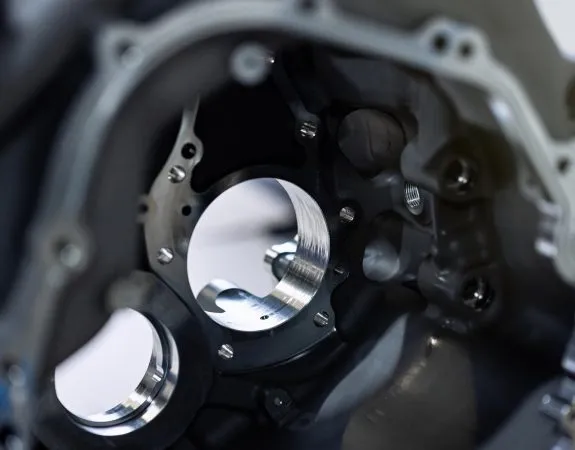
In the world of manufacturing, decisions surrounding production methods can significantly impact cost, lead time, and ultimately, the quality of the final product. We had the opportunity to talk to ShearXL Manager, Spencer Curtis to discuss the intricacies and considerations of machining gearcases from solid billets versus utilising casting methods as they complete a confidential project for the motorsports industry.
Here’s what he had to say:
Spencer explained that clients often opt for machining from solid billets due to a number of factors: small volume requirements, short lead times, and the desire to minimise costs. While casting might be suitable for larger production runs, machining from billets offers a practical, cost-effective solution for low volume needs.
When asked about the impact on strength and durability, Spencer clarified that machining from a solid billet doesn’t necessarily enhance these aspects. Instead, it primarily serves to keep initial costs down for low volume products and expedite the manufacturing process.
Spencer outlined the key steps involved in machining gearcases from solid billets:
In our gearcase machining process, we primarily utilise aluminium due to its versatile properties. The grade of aluminium selected significantly influences performance, particularly regarding how much material we remove with each cut. This consideration is crucial during the programming stage, ensuring that our machining parameters are finely tuned to match the specific grade.
When comparing machining a gearcase from a solid billet to casting methods, specific design considerations and constraints emerge. Unlike casting, where small radii and intricate areas are easily formed, machining from solid billets necessitates reaching these areas with cutting tools. Additionally, minimising stress on the material is paramount, especially when removing large amounts of it. To mitigate this, we allow the billet to “rest” after the initial roughing operation, reducing excess material to prevent metal distortion during subsequent machining stages.
Regarding cost and lead times, machining from solid billets is more cost effective for small batches even with longer production times compared to casting. The unit cost is approximately four times that of a cast part due to the substantial material removal required. However, this cost differential is offset by avoiding expenses associated with designing and producing pattern equipment for casting, as well as the casting process itself. Despite the higher unit costs, lead times can be shorter as we bypass the need to create casting pattern equipment, sourcing billets directly for machining.
Spencer explained their rigorous quality control measures, these include in-process checks with machine touch probes and stage inspections on a Coordinate Measuring Machine (CMM) to ensure part conformity.
In demanding applications, machining from solid billets doesn’t necessarily offer performance advantages over casting. Instead, it’s about speed of production and cost-effectiveness for low volume requirements.
Spencer’s discussion highlights the advantages of solid billet machining, emphasising cost minimisation and efficiency for low volumes. The considerations around design constraints and cost dynamics demonstrate ShearXL’s commitment to precision engineering and client satisfaction. As they prepare to ship their latest project, ShearXL’s expertise in navigating these factors ensures the delivery of high-quality, tailored components to meet their clients’ diverse needs.